THE JAMES TAYLOR QUARTET


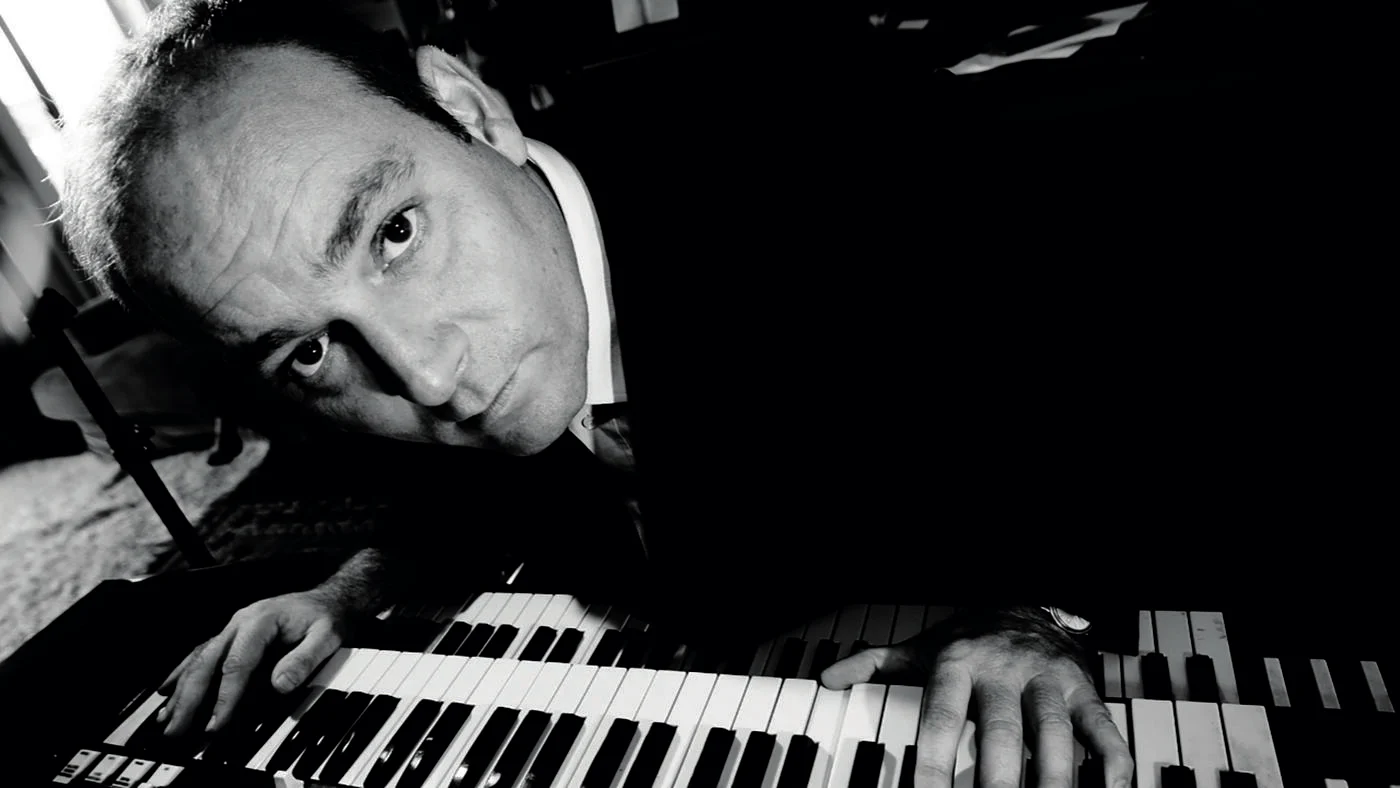
We don't get any press' says James Taylor, arguably the UK's funkiest jazz Hammond organist, talking to me about his combo JTQ. 'I'm amazed to be doing this with you'.

I'm amazed that he's amazed. He's speaking about a band that have built up a massive hardcore live following throughout the world in their 15-year career, and still continue to fill clubs and concert halls wherever they may lay down their distinctive fired-up stew of organ grinding 60s boogaloo beats, R&B/jazz TV/movie themes and soulful funked up grooves. Despite their worldwide approval and undoubted role as ambassadors in spreading the jazz word, they still remain unacknowledged in the jazz press - that is up until now.

We're sitting in a quiet, rather tatty-looking pub opposite Denmark Street, central London's hive of activity for musicians looking to purchase a new bit of gear. Taylor, leader of the UK's currently most successful organ combo, is 'burnt out'. It's the end of May and he's just been on his customary non-stop roller coaster ride that took off from December's week-long annual Jazz Cafe residency, through Janury to end of March collating tracks for JTQ's new album Room At The Top (released on 17th June), followed by a mini tour of the UK over the last two months. He has come uptown from his long-time residence in the traditional mod country that is Medway in Kent, after only the briefest of reprieves from this gruelling work schedule.

'I did a gig about two weeks ago in Dundee where I walked on stage, too tired to play, unable to locate the audience in any way at all. The hour and a half on stage felt like about a week. It was awful'. You can tell Taylor really does care about his fans. After 15 years in the business, touring and playing in front of a live audience may be second nature to Taylor, but it is the lifeblood of JTQ and absolutely never taken for granted. What does James suppose his combo's large-scale devoted live popularity is down to?

After a lengthy pause emphasising the importance of this question to him he says: 'Honesty. I think there are a lot of bands that want to hide from the audience and create this sort of wall. We're one of the bands that want to look directly into the eye of the audience. We're here to do this thing where everyone's involved. We live off the audience. They fuel us. The gig is as much about them as it is about us.'

This inense form of communication with a live audience is the vital ingredient at the heart of JTQ's existence. It is the orgasmic buzz of this interaction that is integral to the convivial nature of their music. Therefore, Taylor speaks with gestured zeal on the subject:

'You have to scan the audience a lot and see what their reaction is. The big thing is the smile. If you're not getting smiles - if you're getting arrogance or smugness or "come on then impress me" - then, you have to devestate them. In the first three songs you have to do it all. And it's a serious fucking business. Then you know that you've worked, that you've hit home and will make contact. If you're really honest with them and bear a bit of soul to them they can see you vulnerable and they can criticise you, or they can share that vulnerability with you.'

Taylor speaks unaffectedly. He may perform up on a stage but on a good night there is no real distance between him and his audience. He could even be one of them. It's equally as easy to imagine him like any other musician, charged up with the romance of coming up from the drab provinces with his mates just to eye up that tasty-looking Leslie speaker in Denmark Street. And this is despite the fact that Taylor has experienced the highs and lows of a rock star-type lifestyle, beginning in 1986 with Radio 1 jock John Peel's championing of JTQ's debut 45, taken from the 1966 Herbie Hancock score from the movie of the same name, Blow Up.

The rising popularity of this single brought Taylor and his band quite literally in from the cold. He swiftly returned from an exile in Sweden having six months earlier disbanded his highly regarded cult 80s mod/garage band The Prisioners - influenced primarily by Taylor's perennial favourites: Small Faces and Booker T and the MGs.

Taylor says that apart from Peel, 'The NME started us off. They gave us lots of features all the time.' JTQ made two albums for the independent Re-elect the President label combining thrashy covers of mainly 60s film soundtracks from the likes of Herbie Hancock, John Barry and Lalo Schifrin, and imaginary originals - with what would become their trademark 'live' raw hard-driving energy.

And then along came the acid jazz movement. Although nostalgia has not set in for this era (yet), at the end of the 1980s this rejuvenated hybrid of 60s/70s club jazz, soul, groove, latin, rap and funk was a natural vehicle for Taylor who was already well into the R&B/jazz organ sounds of Brother Jack McDuff, Richard 'Groove' Holmes, and the jazz Hammond king himself:

'I was in a rock band (The Prisioners) and then going home and listening to Jimmy Smith. Like a lot of jazz music it was an early discovery,' he says.

So how does he look back on the acid jazz scene now? 'There was some good stuff during that whole period but I was very much lost in terms of being a drug addict and an alcoholic, and a lot of people around me were lost. It was that thing about pursuit of pleasure and how long can you keep going for that. It's amazing this whole thing about burning out and then re-inventing yourself. Human beings are strong and able to cope with a lot and come out fighting fit over and over again.'

When I ask him whether he received any hostility from the rock weekly inkies of the time as the band became more musically sophisticated, he suggests this as being an inevitable scenario that the more successful bands often encounter anyway: ('I suppose it (press exposure) is normal for bands in the early days. It's what you do with it after').

In 1988 on the back of a fast expanding live following, JTQ had signed to a major label, Polydor's dance offshoot, Urban.

'For them it was a small deal, for me it was an amazing deal. They didn't really pay us any attention. That was the problem. You make the album, hand it in. It was like "oh yeah, your option's up. We're picking up your option so here's your cheque. Where do you want to make the new album?".'

On the other hand, while Polydor may have neglected the personal management side of their relationship with JTQ they made up for it with a musical commitment that resulted in generous investment:

'When we did the "Starsky and Hutch" theme they let me work with James Brown's horn section, get a good producer in and spend some time and money on a track.'

Despite having a few hits under their belt, the slicker, dancey soul pop and jazz-funk influences during the early 90s period did put off some of their loyal fan base. Though for Taylor this was par for the course:

'I was into jazz-funk at this point and wanted to do something with vocals on and get played on Kiss FM. We did and it got played on the radio. Of course the hardcore JTQ punters were like "what have you done?" but you can't spend your whole life thinking "what will upset the punters?" you've just got to do the thing that will excite you next. That's the real challenge'.

After an initially successful few years with Acid Jazz Records followed by a strong of short-lived album deals, in 2001 JTQ made a recording that would satisfy their devoted legions of fans and at the same time push their jazz credentials further than on any previous albums. It went right back to their earliest unadulterated acid jazz influences. JTQ became The James Taylor Quartet for an old-fashioned 'live' recording session released on the influential 'acid-jazz and beyond' US West Coast label Ubiquity Records. The album Message From the Godfather took as its model the late 60s and early 70s Prestige/Blue note albums by soul jazz artists such as organists Jack McDuff and Charles Earland, and the gritty funk grooves and riffing of New Orleans' The Meters. In other words this was Taylor's first studio recording that combined the immediacy of the groove with the raw spontaneity of a live jazz session. However it's nothing that the JTQ haven't been doing 'live' for 15 years now:

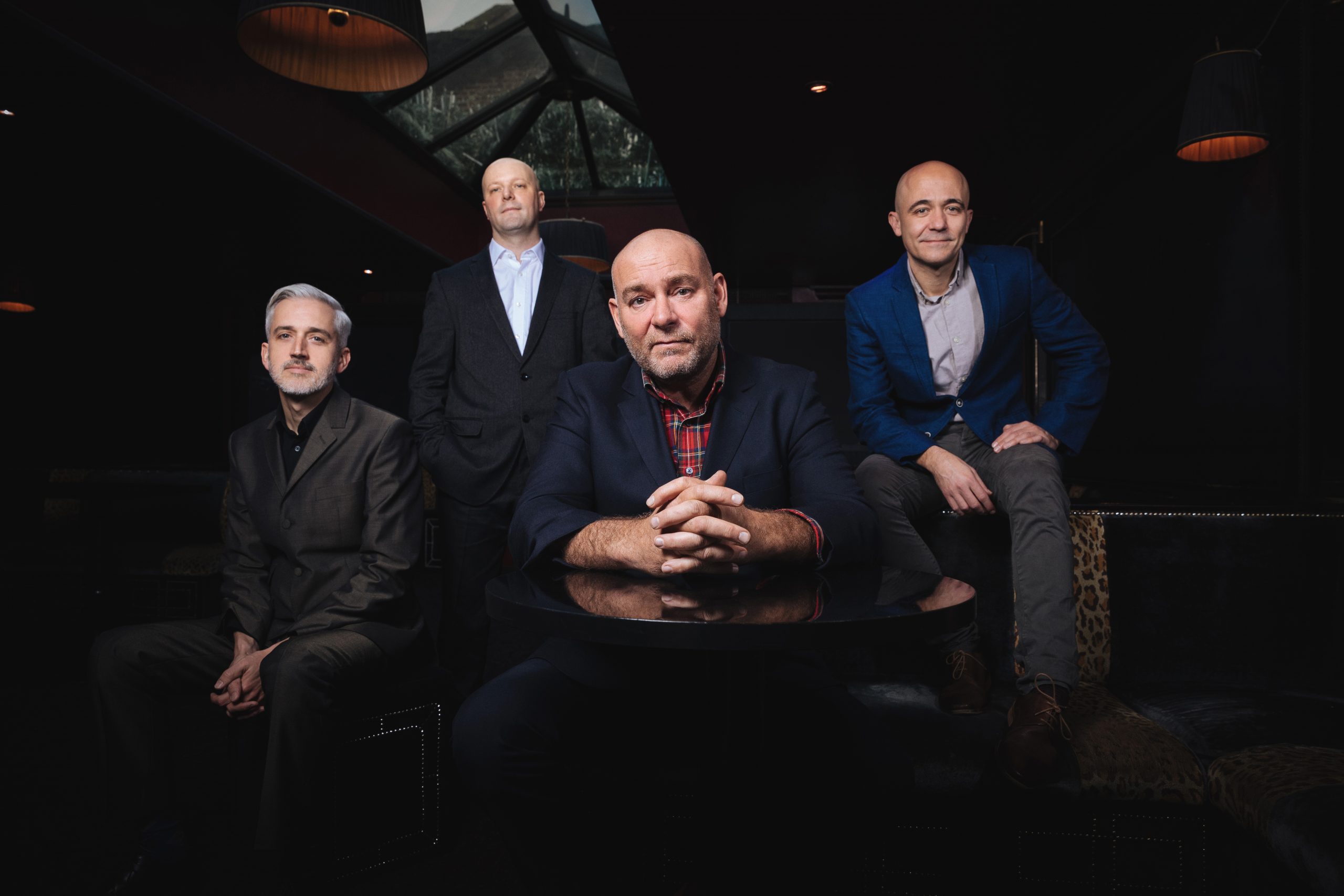
'To build a vibe up with an audience you really have to have at least a minute of blowing. You get to the point where you're really going for it and someone in the audience shouts out and you know you've made contact. We tried to get that (on this recording) by vibing off each other. We didn't have to wear headphones. We just chucked them on the floor, looked at each other and played like you do at a gig. It was very natural'. It helps that he's played with the same rock-steady nucleus for 10 years consisting of brother David on guitar, Gary Crockett on bass, Neil Robinson on drums, and sax/flute player John Willmott.

With the new album Room At The Top and their 15th UK release recorded for Sanctuary Records, Taylor has found a new lease of life and a label that actually like music. 'John Williams, who signed me to Polydor, signed me to Sanctuary. He's always been there taking an interest in my career. He's a Hammond and a music fan. There aren't many of them about in the music business anymore. A lot of them are just like market traders'. Gut Records, for whom JTQ were signed to briefly at the end of the 1990s were one of these corporate-styled culprits:

'I found them to be most aggressive. It was like knock it out, polish it in a way that will produce the most financial gain regardless of the slightest shred of integrity or musicality'.

Into the new millannium and James Taylor is a changed persion: 'I think that in the past I've always been in such a hurry with everything. I've been so impulsive and intense. The pleasure aspect is you join a band, you want to be on stage, go around the world, make albums, get pissed, all the time, like a frenzy. I walk on stage these days much more focused and aware of the pitfalls of what can go wrong if you don't give the audience the respect it deserves. There's this balance between being blase and cool, wanting to show you are what you are and don't give a damn and there's this desire to work the audience. My attitude to touring is I enjoy it more than I ever did. I used to do it very drunk and using a lot of drugs and I do it sober now'.

The touring schedule has also been squeezed: 'It was killing us', he says. 'I remember one year we were touring for maybe six months of the year and then in 1993 it stepped up to about nine months of the year. That was six nights gigging and then a night off for nine months! And that would be going to Japan, Thailand, Australia and America. It's about having to know what you can take on and learning to say no to what would be pushing the boat out too far'.

Room At The Top is consistent with Taylor's new focused outlook and foresight. The album consists of a selection of compositions, some written as far back as five years ago. Recorded in Taylor's purpose-built studio in his Medway home, it took a year to construct and was customised to the band's requirements:

'The new album was all about having the time. So you're making an album at home but not cutting any corners, And you're not making an album in London where you're looking at the clock all the time and maybe with not the people you want around you. So we had the right team and the right stusio, loads of time and tape.'

Soundtrack music is still a very integral part of the JTQ set-up and James is fascinated with music as images:'The main thing I tried to do with this album is paint images. The thing that really excites me with someone like Debussy is you listen to it and you get images. What's stronger than something that paints a picture in your head?'

The album (all Taylor's compositions) is constructed like a musical collage. One half of it returns to the organic pastures of the combo's signature raw energetic grooves. The other half is made up of movie score vignettes that appear as interludes between the funkier tunes. These sound like a dreamy concoction of Roy Budd, John Barry and Air. I suggest to James that these imaginary cinematic scenes sound to me more airy and contemplative than possibly any of his previous work.

'Yeh. Bloody hell. That's the word' says Taylor raving about my four-syllables. ' I hope so anyway. Everyone wants the darkest heaviest whatever. We're talking about vulnerability and being courageous enough to be vulnerable'.

He cites Herbie Hancock's transitional funk album Fat Albert Rotunda from 1969 as a recent influence: 'The third track 'Tell Me A Bedtime Story' is the real light number on there. Rhodes and a bit of flute what have you. But the drums are still pretty mean underneath. It's vulnerable but it still holds water.' One particular example of this on Room At The Top is the track 'Show Me All Your Colours' which features a vibes solo from jazz funk supremo Roy Ayers who JTQ have previously backed on tour' Other guest appearances include the flautist Ian Anderson from 1970s bluesy folk-rock band Jethro Tull who features on the deep funk vocal track 'Free'.

'John Williams (head of Sanctuary) was head of A&R at Chrysalis when Jethro Tull were the main band.' Taylor says. 'He was up for doing something funky. He didn't see himself that way. I really like Living in the Past and some of their earlier stuff. I just thought he was an absolutely great musician.' James Taylor's latest personal venture is Music Therapy. Last year he was interviewed but failed to get on a degree course at Cambridge University.

'I think I already do music therapy. You could argue that the gig thing is just total fantasy and illusion and you can't take anything home with you. Similarily it's very real. You are helping people forget for an hour and a half. That's therapy. That was my little argument to the people up in Cambridge. I know how to do this already! And they were like "I don't think so James, go away and try again next year!". Taylor looks set to continue opening these personal doors and simultaneously 'breaking down the walls' of communication in his music. and there is no reason to go any further than this to find the source of the combo leader's influences and raison d'etre: 'We are a band that's led more than anything by jumping on stage'. he calims. 'Access to an audience, that's what we live on. That's the juice for us.'

Selwyn Harris interviewed James Taylor for the July 2002 issue of Jazzwise
and his interview appears on the JTQ website courtesy of Jazzwise.